

There’s a particular moment before Thanksgiving dinner when the candles are lit, the glasses are filled, and nobody has disturbed the table yet. After all the cooking and polishing and searching for the extra chairs, you get to see it come together.
The flowers are part of that moment. But they also need to work once everyone sits down.
When I’m thinking about a Thanksgiving centerpiece, I’m thinking about the whole evening: how people will talk across it, where the serving dishes will go, and how the flowers will look in candlelight. Here’s where I’d start.
Measure the table before you fill it
Nobody wants a flower dipping into their wine glass.
Consider the arrangement’s entire reach, including the stems that trail beyond the bowl. On a narrow table, a long, slim arrangement may work beautifully; a wide, spreading one can quickly take over everyone’s place setting.
Before you design, put out the plates, glasses, and a few serving dishes. That remaining space is what you actually have to work with.
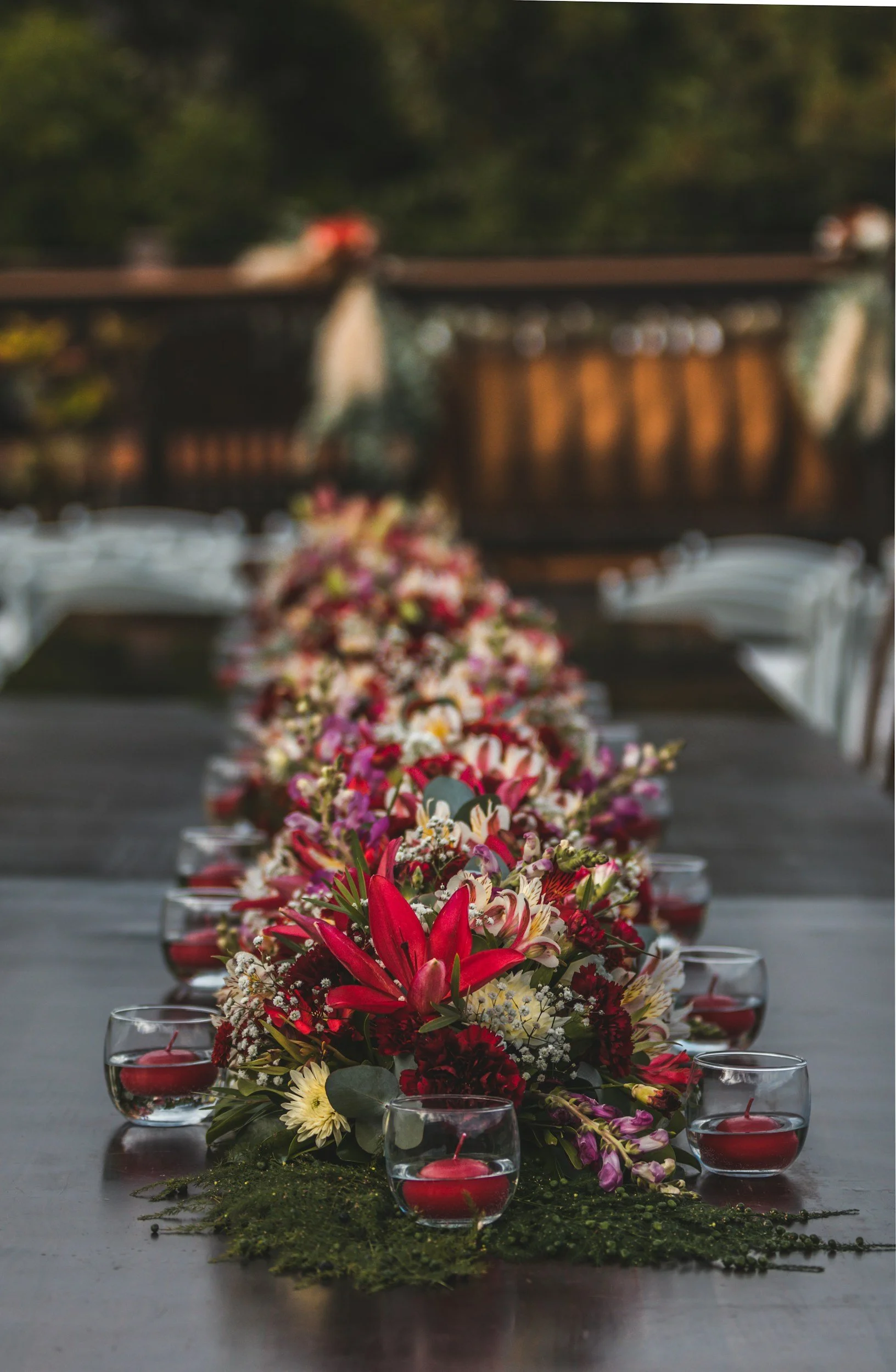
If you’re serving dinner family-style, try several small arrangements that can shift as dishes are passed. For a long table, I love an uneven rhythm of flowers and candles, with enough open space to set down the potatoes.
Make room for conversation
This is so important. If you’ve ever spent dinner leaning around an arrangement to speak to someone, you know how quickly beautiful flowers can become an inconvenience. Suddenly, nobody cares what they look like. They’re simply in the way.
Keep the fullest part of the centerpiece low, with larger blooms gathered near the vessel. Then use a few finer stems at different heights to give it shape and movement. The space between those stems matters: you should be able to look through the arrangement comfortably.
A good test? Sit down. An arrangement looks very different from a dining chair than it does when you’re standing over it.
Look beyond the obvious autumn colors
Orange and red will always have a place at Thanksgiving. But there’s a whole other side of the autumn palette worth exploring.
Burgundy, deep purple, and plum can make a table feel rich and intimate. Different shades of green—from pale pear to olive to a deep woodland green—create depth without needing much additional color. Muted yellow brings warmth, especially beside cream, tobacco brown, or dusty peach.
A few combinations I love:
Plum, burgundy, and dusty mauve, with touches of cream.
Olive green, muted yellow, and warm ivory, alongside brass candlesticks.
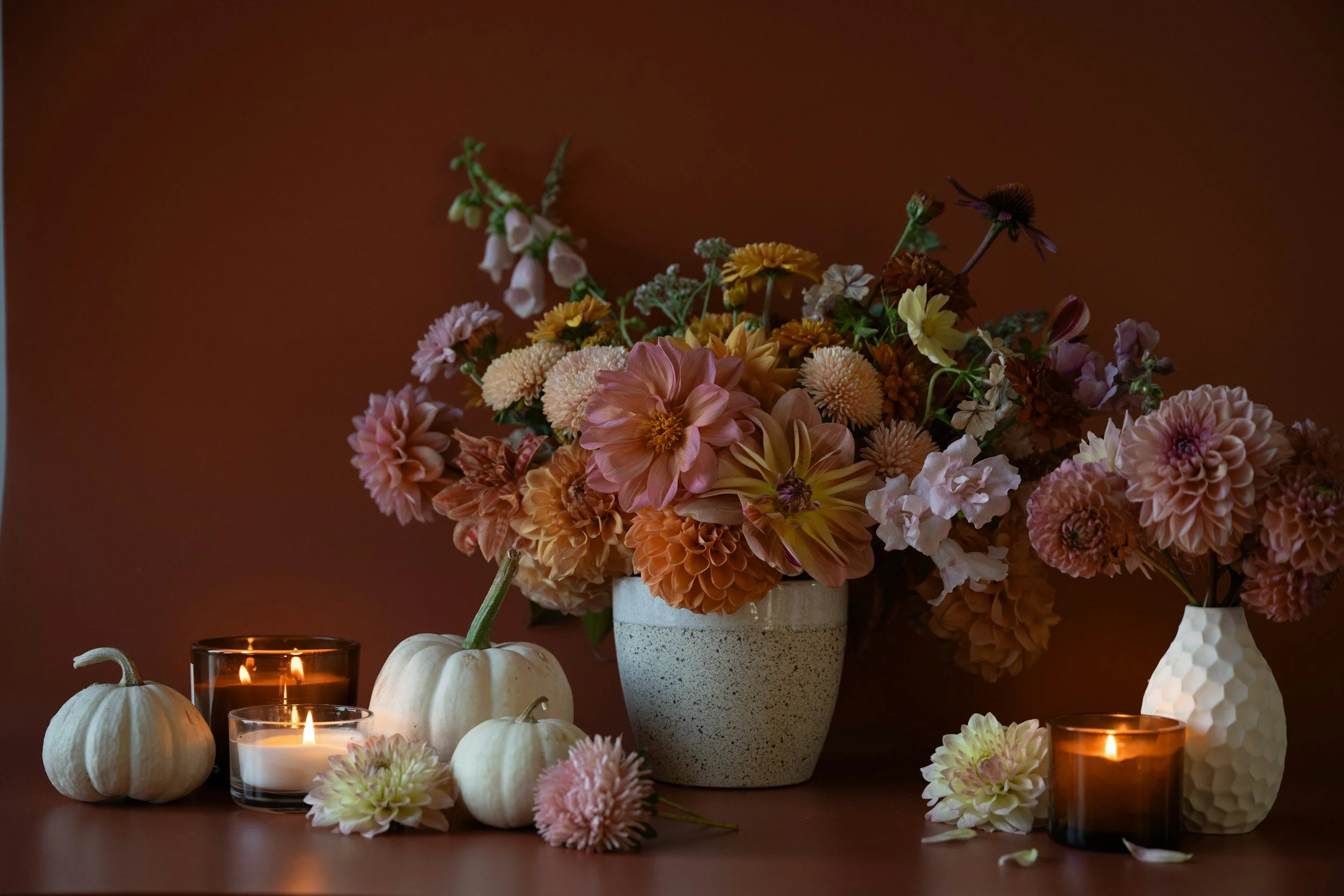
Apricot, copper, and chocolate brown, with a little faded pink.
Pear green, aubergine, and cream, for something a little unexpected.
Choose a palette that has a relationship with your dishes and linens. A small detail in a patterned plate can be enough to build an entire arrangement around.
Choose flowers that belong to the mood
Tulips and lilacs have their moment, but they wouldn’t be my starting point for a Thanksgiving table. We want flowers with the fullness, texture, and depth that make autumn feel like autumn.
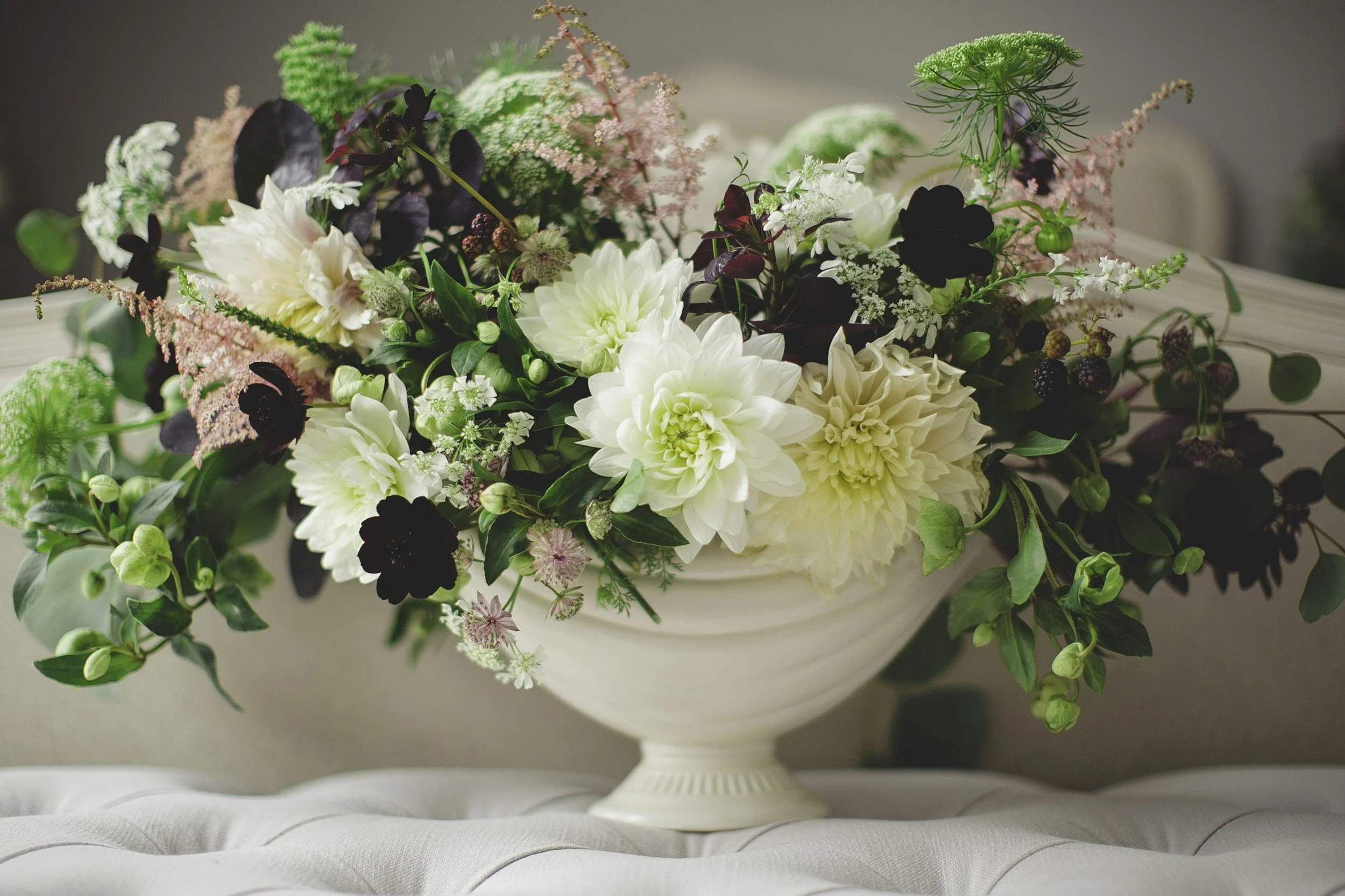
Think dahlias, chrysanthemums, and richly colored roses. Mums deserve particular attention here: look beyond the familiar porch pots, and you’ll find varieties with beautifully curling petals, generous shapes, and subtle colors.
Mix those fuller blooms with branching foliage or finer stems so the arrangement has some breathing room. Forage some branches from your backyard. It doesn’t matter! A few unusual flower forms will do more for it than adding one of everything.
Borrow a little from the still life
For something unexpected, look to the fruit bowl.
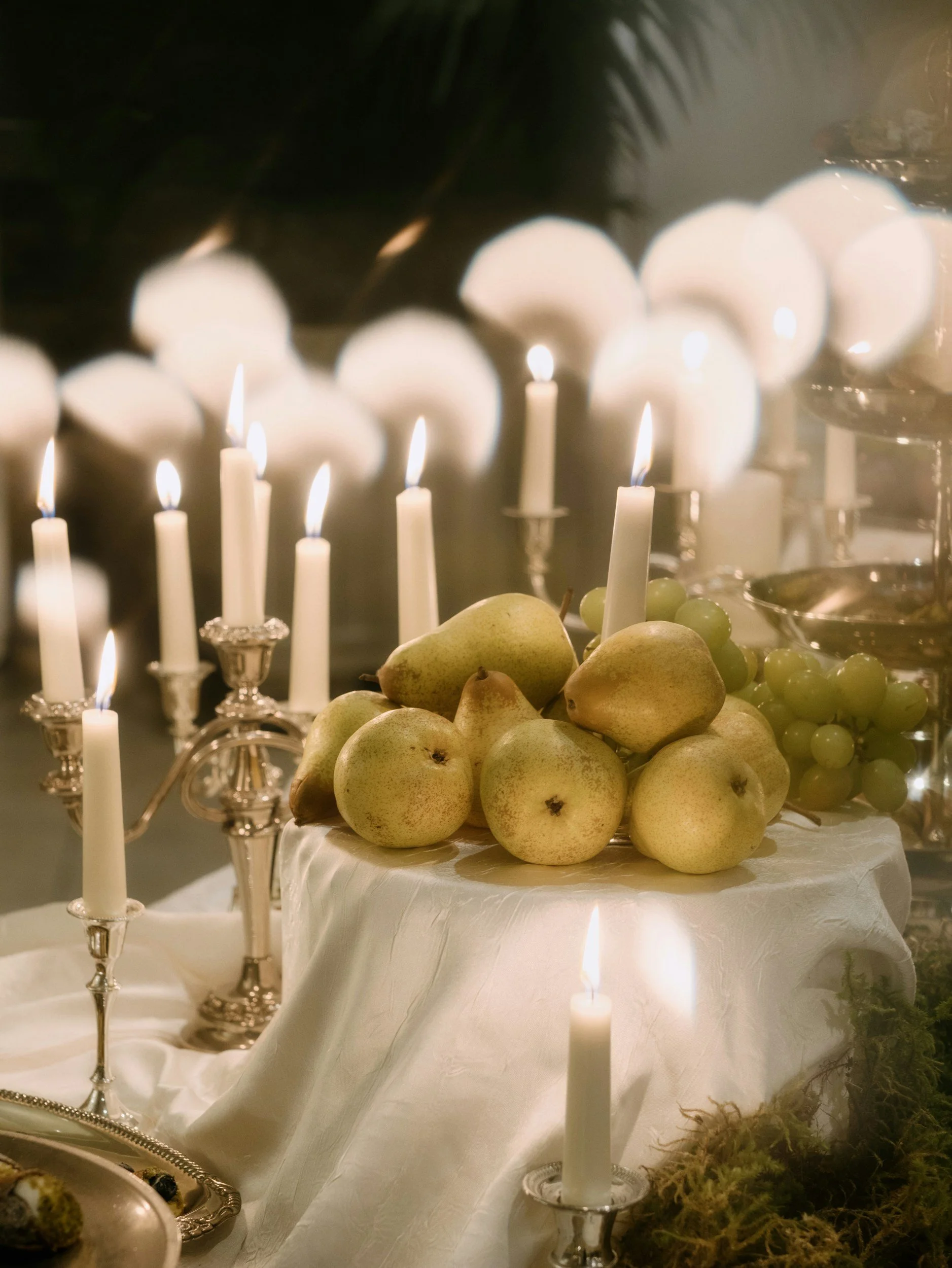
A few Bosc pears, a whole pomegranate beside one cut open, or a small cluster of dark grapes can bring another layer of color and texture to the table. Choose one element and repeat it sparingly. Pears nestled between low arrangements can feel wonderfully generous without turning the table into a harvest display.
Keep cut fruit on a small dish to protect your linens, and give anything edible its own place away from floral water and treated stems.
Give the flowers somewhere interesting to live
The vessel sets the tone before you add a single stem.
A low footed bowl gives flowers a little presence while keeping the blooms close to the table. An old silver piece adds softness and patina. A collection of small ceramic vessels can make a formal dining room feel more relaxed.
You might even let the vessel inspire the palette: plum flowers spilling from aged silver, muted yellow against brown pottery, or green and cream in a favorite blue-and-white bowl.
Save a few stems for the rest of the evening
The dining table doesn’t have to hold every flower.
A small vase near the drinks, a few stems on the entry table, or a little arrangement beside dessert can carry the same colors through the house. It’s a lovely way to welcome people before they ever take their seats—and it takes some pressure off the centerpiece to do everything.
Ultimately, we want Thanksgiving flowers to feel generous and lived with. Beautiful enough to make you pause when you walk into the room, and thoughtfully placed enough that, once dinner starts, you can settle in and enjoy the people around them.
Leave the fragrance to dinner
Scent is easy to overlook when you’re choosing flowers, but you’ll notice it once you sit down beside them. Strongly fragrant blooms can compete with the food, especially when there’s an arrangement near every place setting.
Save those flowers for the entryway, where their fragrance can be part of the welcome. For the dining table, choose flowers with little scent and use unscented candles. There’s already plenty to look forward to coming out of the kitchen.
Try your colors by candlelight
If dinner is happening after dark, take a look at your flowers under the lighting you’ll actually use.
Deep burgundy and plum can look magnificent in daylight, then lose some of their detail in a dim room. A few lighter blooms—dusty peach, muted yellow, or warm cream—can help separate those darker shades and keep the arrangement from becoming one dark silhouette.
Light the candles, dim the overheads, and take a seat. You may find that the arrangement needs just one pale flower in the right place.
Let one detail belong to your family
Before buying another decoration, look at what already comes out every Thanksgiving. Your grandmother’s silver bowl, the amber glasses your parents always used, a slightly eccentric set of salt and pepper shakers—any of these can give the flowers a direction.
Pick up the amber in a chrysanthemum, echo a painted detail from the china, or arrange loose garden-style flowers in a formal family piece. Those connections make a table feel personal.
I love a beautiful table even more when there’s something on it that prompts someone to say, “Do you remember when…?”
Planning your Thanksgiving table? Get in touch with Joe Gardens to talk about flowers for your gathering.